About SustainGenix: Architects of Climate-Resilient & Inclusive Tourism
We don't just report on the climate transition; we provide the tools for communities to lead it.
SustainGenix is a technical consultancy specialising in the intersection of climate resilience, forensic data, and socio-economic equity. We provide the strategic foresight required to navigate the 2026 regulatory shift (CSRD/ESRS) while ensuring that tourism development is locally led, data-sovereign, and inclusive by design.
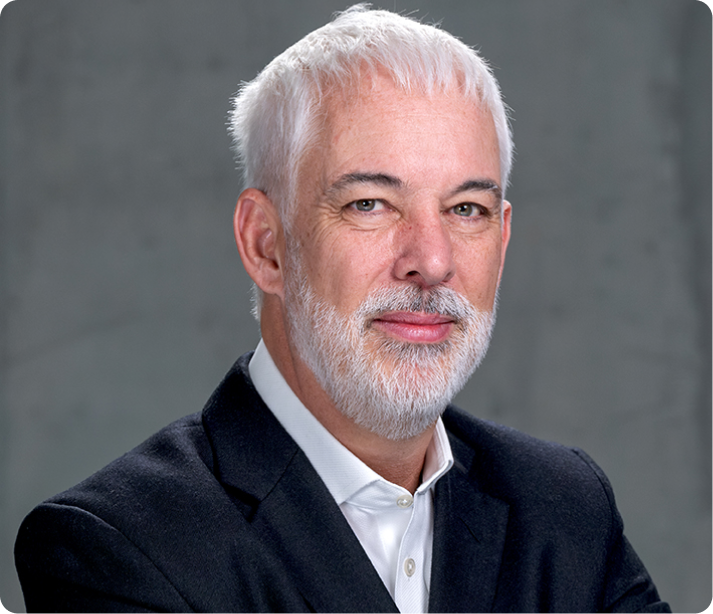
Led by Robin Boustead, World Bank technical consultant, former Technical Advisor to EFRAG and architect of the Great Himalaya Trail (GHT), we bridge the gap between high-level policy advisory and ground-level implementation.
Our Core Philosophy: "Walk the Talk" on Localisation
We believe that data is the ultimate tool for destination sovereignty. We don’t just consult; we build integrated, open-access frameworks that empower local communities. Our Field-to-Finance approach ensures that even the most remote mountain regions have access to the same calibre of analytics as global capitals
Innovation in Action: The GHT-DataConnect Framework
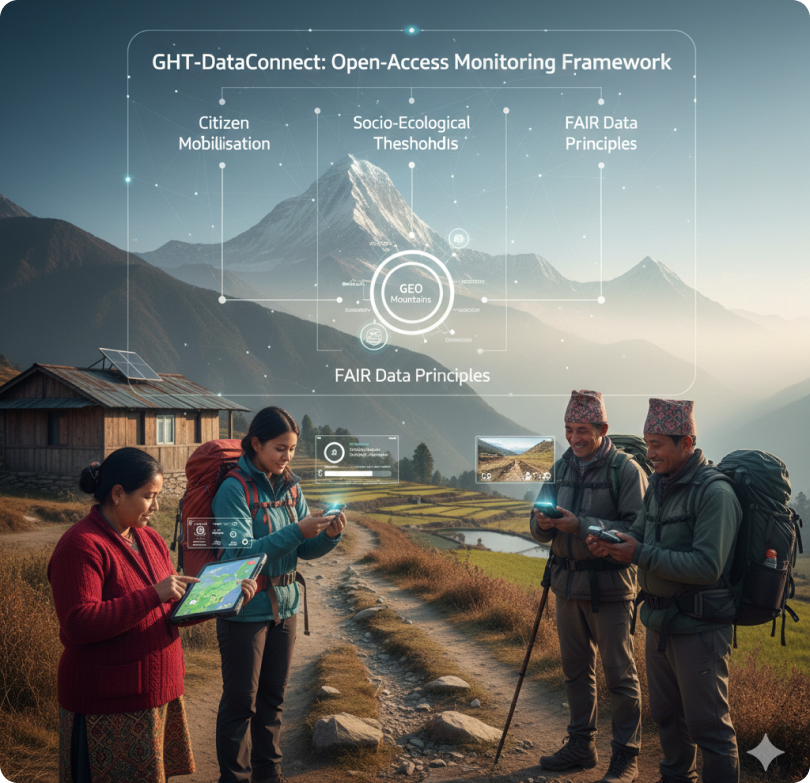
Our commitment to local impact is best demonstrated by GHT-DataConnect, our open-access monitoring framework for the Hindu Kush Himalaya. This initiative addresses the mountain data gap through:
Citizen Science Mobilisation:
Training networks of local guides, female-led teahouse MSME entrepreneurs, and community charter stakeholders to collect real-time data on trail pressure, water demand, and ecological thresholds.
Sociol-Ecological Thresholds
Moving beyond arrivals to define safe-stress-overshoot zones, protecting fragile alpine ecosystems before irreversible damage occurs.
FAIR Data Principles:
Delivering findable, accessible, and interoperable datasets (GeoJSON/CSV) that are registered in global inventories like GEO Mountains, ensuring local knowledge is visible on the world stage.
Inclusion by Design
At SustainGenix, we don't just advocate for GESI (Gender Equality and Social Inclusion); we build it into our project DNA.
ECR Leadership
We prioritise Early-Career Researchers (ECRs), with 60% of our technical roles filled by emerging specialists from local institutions like Tribhuvan University and ICIMOD.
Gender-Balanced Governance
Our steering committees maintain a strict 50/50 gender ratio, ensuring women’s unique perspectives on resource management are central to our strategies.
Removing Barriers
We provide targeted stipends and travel grants for researchers from underrepresented mountain districts, ensuring that economic status never limits participation in the green transition.
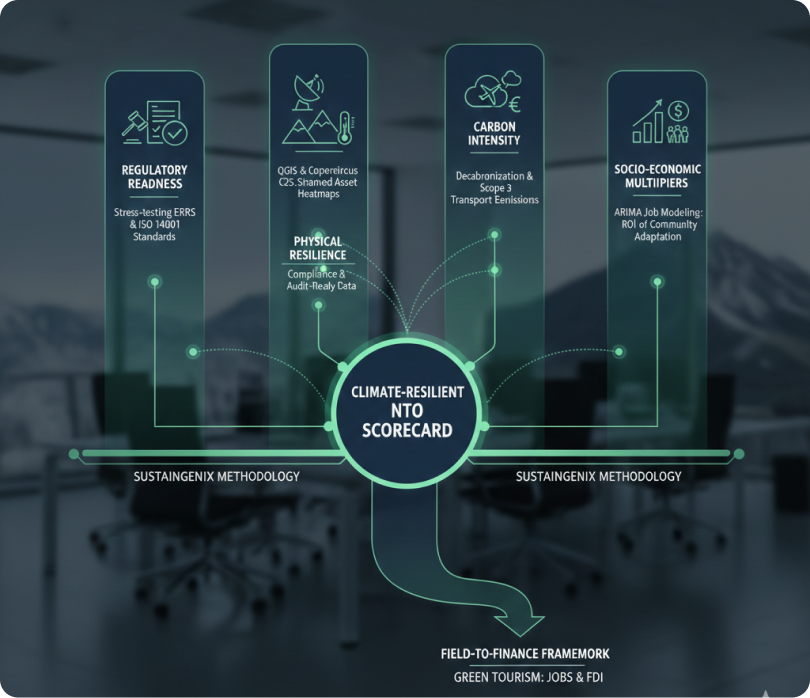
Our work for NTOs and international development partners is built on four technical pillars:
1
Data Salvage & Audit
Rescuing fragmented records and digitizing them into ISO-compliant metadata.
2
Spatial Stress-Testing
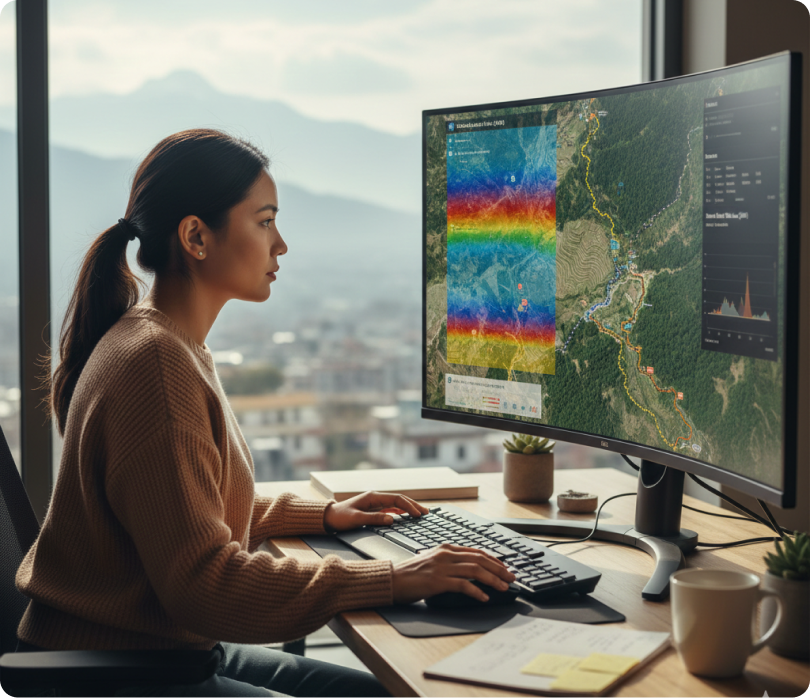
Overlaying supply-side assets with climate hazard and transition-risk layers.
3
Economic Synthesis
Modeling demand elasticity and job creation potential.
4
Bankable Outputs
Delivering Investment Readiness Scorecards (IRS) and FDI Prospectuses.
The 4-Pillar Forensic Architecture
Global Reach, Local Authority
Our Market-to-Impact capability is anchored by strategic in-country partnerships. By working with established expert-led organisations like HURDEC Pvt. Ltd. (Nepal) and Global Bhutan Research, we combine decades of experience in local labour-market intelligence with international econometric modelling. This synergy ensures our findings are technically superior, culturally grounded, and audit-compliant for the 2026 reporting cycle.
"We don't just report on the climate transition; we provide the tools for communities to lead it."
We don't just report on the climate transition; we provide the tools for communities to lead it