
The Decarbonization Engine
Carmacal and the Forensic Science of Scope 3 Emissions: Quantifying the "Aviation Elephant" for Global Tourism
Executive Summary
In the high-stakes arena of the 2026 climate mandate, “Carbon Footprinting” has transitioned from a marketing exercise to a rigorous financial disclosure requirement. For the travel and hospitality sectors, the primary challenge lies in Scope 3 (Category 11) emissions—the downstream transportation of visitors that typically accounts for 80% to 90% of a destination’s total carbon impact.
As the Project Director for Carmacal, Robin Boustead led the development of the world’s most sophisticated Greenhouse Gas (GHG) calculation system tailored specifically for the travel industry. This case study explores how Carmacal became the industry standard, providing the technical logic required for entities to comply with ESRS E1 (Climate Change) while driving operational resilience through data-led decision-making.
The Strategic Problem: The "Aviation Paradox"
Before Carmacal’s inception, the travel industry suffered from a profound lack of technical accuracy in carbon accounting. Most existing tools relied on "Broad-Brush" averages that failed to account for:
- Radiative Forcing (RF):The non-$CO_2$ effects of aviation at high altitudes, which significantly amplify climate impact.
- Segmented Journeys:The inability to distinguish between the carbon intensity of a multi-leg long-haul flight versus a direct regional journey.
- Supply Chain Opacity:A lack of verifiable data on the footprint of local transport, accommodation, and activities within a single itinerary.
For NTOs and global tour operators, this created a Transition Risk. Without forensic carbon data, they could not predict how carbon pricing (such as the EU ETS) would impact their bottom line, nor could they provide the audit-ready disclosures required by institutional investors.
The Technical Innovation: Building the Carmacal Logic
Under Robin Boustead’s leadership, the Carmacal project was designed to be a “Zero-Defect” tool for international and domestic operators. The methodology was built on the GHG Protocol but extended to meet the specific “outside-in” financial materiality requirements of the tourism sector.
1
Solving the Scope 3 Measurement Gap
Carmacal’s primary differentiator is its ability to map Scope 3, Category 11 emissions with surgical precision.
- The Math:By integrating flight-level data, including aircraft type, load factors, and actual flight distances, Carmacal replaced “Estimated Averages” with “Forensic Reality.”
- The Systems-Thinking Link:Carmacal doesn’t just measure a flight; it measures a Visitor Journey. It aggregates the impact of agriculture (food consumed on-site), IT (digital booking footprints), and textiles (laundry and amenities) into a single, interoperable dataset.
2
Interoperability & EPM Integration
Recognizing that a tool is only as good as its usability, Robin ensured that Carmacal was built as an Enterprise Performance Management (EPM) solution.
- Audit-Ready Disclosures:The tool generates reports that are natively aligned with ESRS E1 and GRI 305
- API Frameworks:The logic was designed to plug into existing booking engines, allowing operators to see the carbon price of an itinerary in real-time, just as they would see the financial cost.
Field-to-Finance: Linking Carbon to Capital
A central pillar of the SustainGenix philosophy is that data must lead to investment. Carmacal was designed to bridge the gap between Environmental Impact and Green Financing.
A central pillar of the SustainGenix philosophy is that data must lead to investment. Carmacal was designed to bridge the gap between Environmental Impact and Green Financing.
- Carbon-Efficiency Mapping:By calculating the “Emissions-per-Euro-Spent,” SustainGenix used Carmacal to identify which visitor segments provided the highest economic value with the lowest environmental cost.
- Bankable Offsetting:The tool linked directly to verified carbon-offsetting and green-financing platforms, allowing companies to “internalize the carbon cost” and reinvest in adaptation projects—such as the sustainable agriculture initiatives led by Invest International.
Deployment & Impact: 170+ Companies and Counting
The deployment of Carmacal, supported by Robin’s role as a Travelife Certified Coach and Auditor, involved a massive capacity-building effort.
Sustainability Coaching:
Robin personally coached over 170 companies—ranging from multinational travel groups to local SMEs in Thailand and Bhutan—to integrate Carmacal into their core operations.
Transitioning to Low-Carbon Clusters:
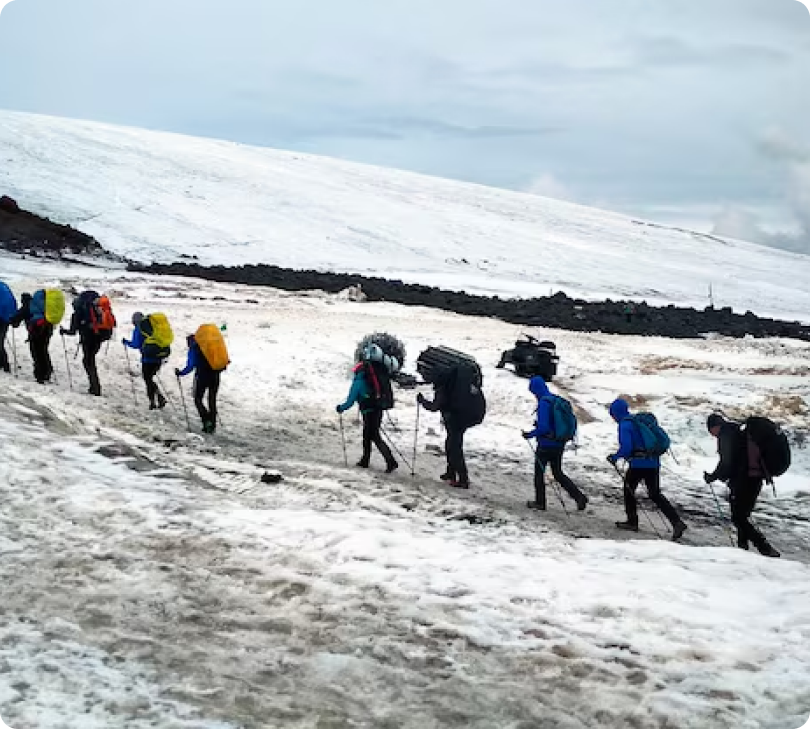
In Bhutan and Thailand, Carmacal was used to "Productize" low-carbon tourism. By identifying the carbon-intensive "hotspots" in a trek or a coastal stay, operators could re-engineer their supply chains (sourcing local food, reducing short-haul domestic flights) to meet High-Value, Low-Impact targets.
The 2026 Regulatory Alignment: CSRD and Beyond
With the publication of the ESG Reporting Manual, Robin has integrated the Carmacal logic into a broader regulatory roadmap.
- Financial Materiality:Carmacal provides the data needed to conduct the “Outside-In” analysis required by the CSRD. If carbon taxes increase by 50%, what is the impact on demand for a specific destination?
- The “Double Materiality” Stress-Test:The tool allows companies to see how their carbon reduction (Impact Materiality) directly de-risks their business model against future legislation (Financial Materiality).
Systems-Thinking in Practice: The Value Chain Perspective
Carmacal is the engine that allows SustainGenix to map the entire value chain.
- Agriculture:Measuring the footprint of the food supply chain for hotels.
- Textiles:Accounting for the carbon cost of linens and staff uniforms.
- IT:Tracking the energy use of the digital tools that power the travel ecosystem.
- Manufacturing:Evaluating the lifecycle emissions of the gear and vehicles used in adventure tourism.
By applying this Forensic Lens, Robin has proven that decarbonization is not about “doing less,” but about “Doing Smarter.”
Conclusion: Data Sovereignty and the Future of Travel
The success of Carmacal proves that Carbon is the new Currency. In a world where institutional investors and the European Union demand “Audit-Ready” transparency, Carmacal provides the technical sovereignty that travel organizations need to survive.
Through the work of SustainGenix, the Carmacal legacy continues to evolve. It is no longer just a calculator; it is a Strategic Management Tool that ensures the “Aviation Elephant” is measured, managed, and mitigated.

We don't just report on the climate transition; we provide the tools for communities to lead it
SustainGenix GmbH
Marie-Curie-Straße 8,
D-79539 Lörrach, Germany
Commercial Register: Amtsgericht Freiburg i. Br. HRB 730031
Tax number: 11087/29562
VAT ID: DE365116198
E: info (@) sustaingenix.com
T: +49 160 339 4661
Useful Link
follow us:
I have read and understood privacy and cookies Policy and ready to join the mailing list.


Copyright © 2026 sustaingenixgmbh. All Rights Reserved.