From Fragmented Trails to a Unified Data Architecture: A "Field-to-Finance" Transformation
Executive Summary
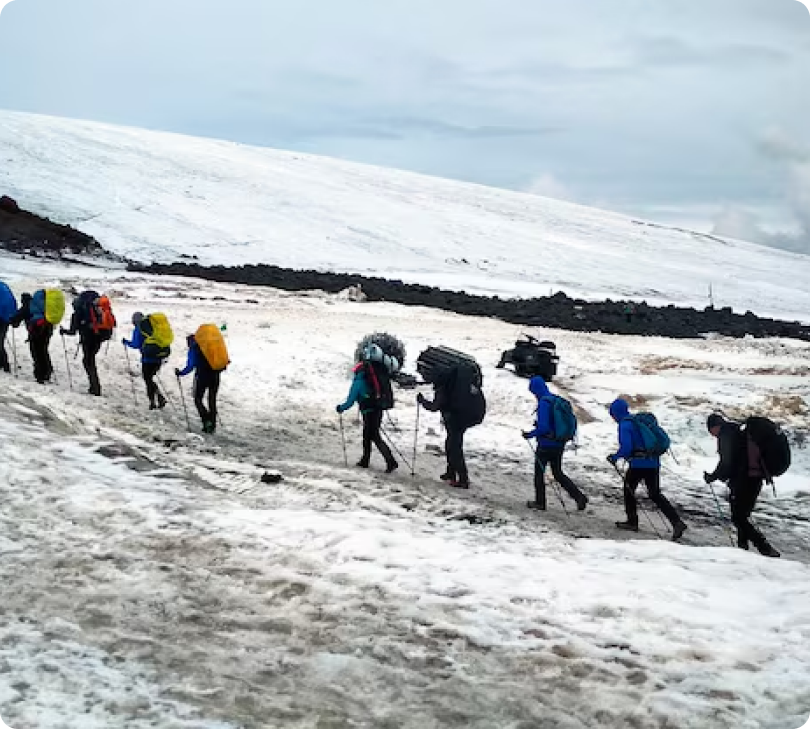
The Great Himalaya Trail (GHT) is one of the longest and highest alpine trekking circuits in the world, spanning the entirety of Nepal’s mountain spine. While initially conceived as a marketing concept, the GHT faced significant “Implementation Gaps” due to a lack of granular supply-side data and a standardized monitoring framework.
SustainGenix was engaged to transition the GHT from a conceptual “line on a map” into a technically audited, socio-ecologically resilient tourism corridor. By deploying our 4-Pillar Forensic Architecture, we integrated citizen science, GIS spatial auditing, and inclusive governance to create a model for destination sovereignty.
The Challenge: The "Mountain Data Gap"
Before SustainGenix’s intervention, the GHT operated in a data vacuum. High-altitude tourism in Nepal was characterized by:
Information Asymmetry:Power sat with international operators, while local teahouse entrepreneurs lacked the data to negotiate fair value.
Stranded Infrastructure:Significant investment was being funneled into regions with high climate-hazard vulnerability without prior spatial auditing.
Unmonitored Thresholds:No mechanism existed to measure “Visitor-to-Resource” ratios, leading to localized water scarcity and waste management crises in fragile alpine zones.
The Methodology: Deploying GHT-DataConnect
To solve these challenges, SustainGenix deployed the GHT-DataConnect Framework, an integrated op en-access monitoring system.
1
Data Salvage & Digital Forensics
We began by “rescuing” 25 years of fragmented tourism data. This involved digitizing paper-based trekking logs, historical permit records (2015–2025), and teahouse guest books from remote districts like Dolpa and Kanchenjunga.
Technical Output:A standardized geospatial database (GeoJSON/CSV) registered in the GEO Mountains Inventory.
2
Citizen Science & Mobile Mobilization
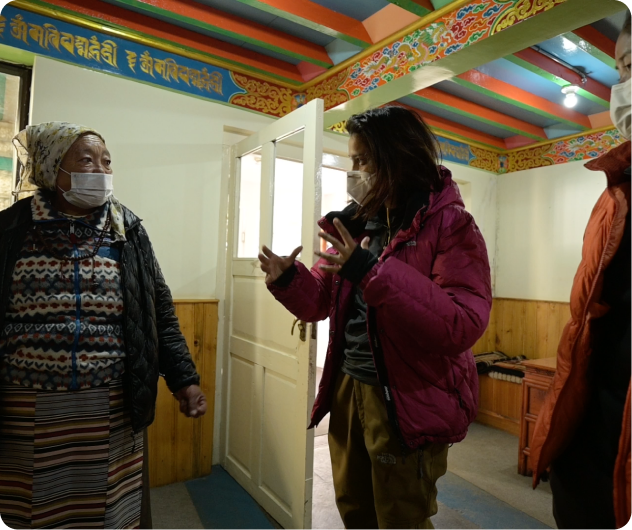
We moved beyond top-down auditing by training a network of 20 GHT-affiliated guides and female-led teahouse cooperatives. Using mobile tools (KoboToolbox), these “Data Guardians” collected real-time in-situ observations.
Metrics Tracked:Trail erosion patterns, waste accumulation proxies, and daily water demand in teahouse clusters.
Impact:This shifted the data ownership from foreign researchers to local stakeholders, a core principle of Data Sovereignty.
Using QGIS and Copernicus C3S satellite data, we conducted a forensic spatial audit of the GHT corridor.
Mapping the "Red Zones"
We overlaid the GHT’s physical infrastructure with climate hazard maps. This allowed us to identify Stranded Assets—lodges and bridges located in “High-Risk” zones for Glacial Lake Outburst Floods (GLOFs) or landslide-prone thermal anomalies.
Defining Socio-Ecological Thresholds
One of the most innovative aspects of the GHT project was moving beyond “Arrival Numbers” as a metric for success. Instead, we defined Safe-Stress-Overshoot Zones.
The Math:We calculated the ecological carrying capacity of specific high-altitude campsites based on biomass availability (for fuel) and water recharge rates.
The Result:A “Climate Reliability Index” for different trail segments, allowing NTOs to manage visitor flow proactively.
Inclusion by Design: The GESI Architecture
SustainGenix recognized that the GHT’s survival depended on social equity. Our "Inclusion by Design" approach was built directly into the project’s DNA:
Gender-Balanced Governance:
We ensured a strict 50/50 gender ratio in steering committees, prioritizing the voices of women who manage 70% of the GHT’s resource-intensive teahouse operations.
Early-Career Researchers (ECRs):
60% of our technical roles were filled by emerging specialists from local institutions like Tribhuvan University.
Removing Barriers:
We provided targeted stipends for researchers from underrepresented districts, ensuring that economic status never limited participation in the green transition.
The "Field-to-Finance" Outcome: Investment Readiness
The final phase of the GHT project was translating field data into a Bankable Investment Prospectus.
ROI of Adaptation
Using ARIMA-driven job modelling, we quantified the economic multiplier of the GHT. We proved that every $1 spent on “Green Infrastructure” along the trail generated 3.4x more local value compared to mass-market coastal models.
The Investment Readiness Scorecard (IRS)
We evaluated the “Bankability” of various GHT segments for Foreign Direct Investment (FDI). This included:
Connectivity Audits:Evaluating digital and physical access.
ESG Compliance:Ensuring products met World Bank GRID
Revenue Projections:10-year demand forecasting based on global “Coolcation” trends.
Strategic Implications: A Global Benchmark
The GHT Case Study serves as a functional benchmark for the European Green Deal and other mountain regions (e.g., the Alps, the Andes). It proves that even in the most remote, low-data environments, it is possible to build an Audit-Ready, Climate-Resilient Tourism Strategy.
Key Deliverables Archived:
The GHT Socio-Ecological Dataset (v1.0):FAIR-compliant data published on Zenodo.
The Decision-Support Dashboard:A low-latency tool for local mayors to identify visitor overshoot.
The GHT Sustainability Library:A collection of standardized metrics for alpine tourism.
Conclusion: Walking the Talk
The Great Himalaya Trail is no longer just a trek; it is a Data Corridor. By applying our forensic architecture, SustainGenix has provided the tools for Himalayan communities to lead their own climate transition. We didn’t just report on the GHT; we built the infrastructure that ensures its survival in a volatile 2026 climate landscape.
Next Steps: What this means for your Destination
Is your destination ready for the 2026 regulatory shift? Whether you are managing an alpine corridor or a coastal cluster, the lessons from the GHT are universal: Data is the ultimate tool for sovereignty.
Would you like to:
Download the GHT Technical Brief?
Request a Demo of the DataConnect Dashboard?
Speak to Robin Boustead about replicating this framework?
We don't just report on the climate transition; we provide the tools for communities to lead it